
Practicing Gratitude: How to Foster Thankfulness During Challenging Times

Gratitude is a powerful emotion that can positively transform the way we experience the world. Yet, during stressful times—like the holiday season, a busy workweek, or moments of uncertainty—it can feel especially difficult to tap into thankfulness. Practicing gratitude doesn’t mean ignoring challenges; instead, it’s about finding moments of appreciation amidst the difficulties, which can help ground and center us.
The Mental Health Benefits of Gratitude
Research shows that gratitude is linked to numerous mental health benefits, including reduced stress, improved mood, and stronger relationships. By shifting focus from what’s lacking to what’s present and meaningful, gratitude can decrease negative thought patterns and enhance emotional resilience. For example, practicing gratitude regularly has been shown to lower symptoms of depression and anxiety, improve sleep quality, and foster a greater sense of connection with others.
Gratitude also aligns with evidence-based therapeutic practices. In Dialectical Behavior Therapy (DBT), focusing on positive experiences—while practicing mindfulness—can help regulate emotions and counteract feelings of overwhelm. Similarly, Cognitive Behavioral Therapy (CBT) encourages reframing negative thinking, which pairs beautifully with gratitude practices by helping clients focus on what’s going well.
Simple Ways to Practice Gratitude
If you’re wondering how to incorporate gratitude into your daily life, here are some simple, effective practices to get started:

Gratitude Journaling: Set aside a few minutes each day to write down three things you’re grateful for. These can be big (a supportive friend) or small (a warm cup of coffee). Over time, this practice trains your brain to notice more positives in your life.
Thank You Notes: Expressing gratitude directly to someone can deepen your sense of connection. Write a note, send a text, or even verbalize your thanks to someone who has made a difference in your day.
Mindful Moments: Pause during your day to savor simple pleasures—a cozy blanket, a kind smile, or the feeling of sunshine. Engaging your senses in the moment helps anchor gratitude in your mind and body.
Gratitude Jar: Create a family or personal tradition by writing things you’re grateful for on small slips of paper and collecting them in a jar. Over time, revisiting these notes can be a powerful reminder of positive moments.
Focus on Strengths in Challenges: Gratitude doesn’t mean ignoring difficulties. Instead, try to identify strengths or lessons that emerge from challenges. For example, consider the resilience you’ve developed through a tough situation.
Gratitude at Healgood
At Healgood, we recognize the power of gratitude as a therapeutic tool. Whether through mindfulness practices, DBT skills, or personalized therapeutic approaches, we incorporate gratitude into the work we do with clients to support emotional well-being and resilience.
This holiday season, consider how gratitude can play a role in your mental health journey. Start small, focus on the moments that bring joy, and give yourself grace when it feels harder to find. Gratitude isn’t about perfection—it’s about practicing awareness and appreciation, one moment at a time.
For more tools to navigate this season, explore our Holiday Survival Guide workbook or reach out to our team at Healgood. We’re here to support you.

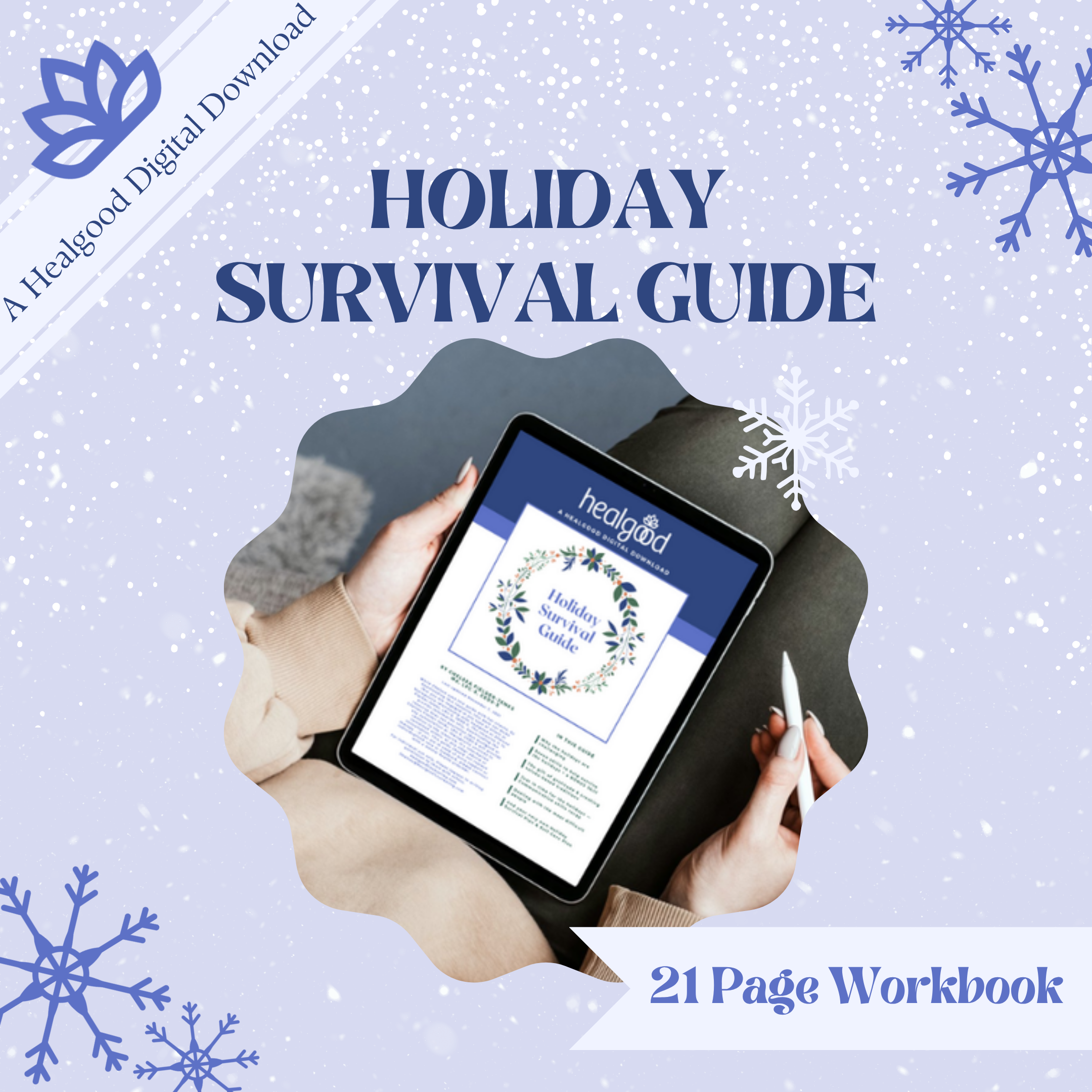
The holiday season is often painted as a time of joy and celebration, but for many, it can also be a period of heightened stress and emotional difficulty. Challenges such as navigating family dynamics, busy schedules, financial pressures, and even loneliness can take a toll on our mental well-being.
Each year in my work with clients, the theme of coping through the holidays resurfaces. What started as a short handout early in my career as a therapist has, over a decade later, grown into a 21-page workbook designed to help clients develop skills and tools to build insight and resilience through the season’s highs and lows. And now, it’s available to you as as a digital download!
This digital guide covers essential topics to help you understand why the holidays may feel overwhelming and provides seven core skills to manage stress—plus a bonus skill to further support your mental wellness. Here’s a sneak peek at what’s inside:
What You’ll Find in the Workbook
Understanding Holiday Distress: We start by exploring why the holiday season often triggers stress, anxiety, or sadness, helping you feel validated and prepared to face common holiday challenges.
Eight Skills to Help You Cope: This section covers evidence-based skills that will help you cope ahead for the holidays.
Snow Globe Mindfulness: Inspired by the peaceful settling of a snow globe, this mindfulness metaphor and practice guide will help you find calm amidst the seasonal chaos.
The Gift of Gratitude and Values-Based Traditions: Learn how to make gratitude a focal point of your holiday season and explore values-based traditions that can make the holidays more meaningful and fulfilling.
Effective Communication Refresher: Master essential communication techniques, including honesty statements and validation skills, to help you handle challenging conversations with grace and confidence.
Dealing with Difficult People: This skill is about dealing with the “most difficult” people and relationships. Even when things are challenging and people are difficult to deal with, it may be in your best interest to figure out how to deal with them effectively.
Radical Acceptance: This skill will guide you through accepting things you can’t change so you can reduce frustration and stay focused on what matters.
Journaling Prompts and Reflection: Journaling prompts that encourage self-reflection and application of the skills and tools in the guide, helping you process your experiences and prepare for the new year.
Holiday Survival and Self-Care Plans: The workbook includes templates to create your own personalized Holiday Survival Plan and Holiday Self-Care Plan, empowering you to proactively manage your well-being.
— Chelsea Fielder-Jenks, LPC-S, CEDS-C, PMH-C
Therapist & Healgood Founder
Created By: Chelsea Fielder-Jenks, LPC-S, CEDS-C, PMH-C
Format: Digital Download - Printable PDF
Healgood’s Holiday Survival Guide includes gratitude practices and so much more!
References
Emmons, R. A., & McCullough, M. E. (2003). The psychology of gratitude: An introduction. In R. A. Emmons & M. E. McCullough (Eds.), The psychology of gratitude (pp. 3–16). Oxford University Press.
Wood, A. M., Froh, J. J., & Geraghty, A. W. A. (2010). Gratitude and well-being: A review and theoretical integration. Clinical Psychology Review, 30(7), 890–905. https://doi.org/10.1016/j.cpr.2010.03.005
Kashdan, T. B., Uswatte, G., & Julian, T. (2006). Gratitude and hedonic and eudaimonic well-being in Vietnam war veterans. Behaviour Research and Therapy, 44(2), 177–199. https://doi.org/10.1016/j.brat.2005.01.005
Lambert, N. M., Fincham, F. D., Stillman, T. F., & Dean, L. R. (2009). More gratitude, less materialism: The mediating role of life satisfaction. Journal of Positive Psychology, 4(1), 32–42. https://doi.org/10.1080/17439760802216311
Fredrickson, B. L. (2001). The role of positive emotions in positive psychology: The broaden-and-build theory of positive emotions. American Psychologist, 56(3), 218–226. https://doi.org/10.1037/0003-066X.56.3.218
Davis, D. E., Choe, E., Meyers, J., Wade, N., Varjas, K., Gifford, A., Quinn, A., Hook, J. N., & Worthington, E. L. (2016). Thankful for the little things: A meta-analysis of gratitude interventions. Journal of Counseling Psychology, 63(1), 20–31. https://doi.org/10.1037/cou0000107
Linehan, M. M. (2015). DBT Skills Training Manual. Guilford Publications.
Watkins, P. C., Cruz, L., Holben, H., & Kolts, R. L. (2008). Taking care of business? Grateful processing of unpleasant memories. Journal of Positive Psychology, 3(2), 87–99. https://doi.org/10.1080/17439760701760567
American Psychological Association. (2019). How gratitude changes you and your brain. Retrieved from https://www.apa.org
Neff, K. D. (2003). Self-compassion: An alternative conceptualization of a healthy attitude toward oneself. Self and Identity, 2(2), 85–101. https://doi.org/10.1080/15298860309032