
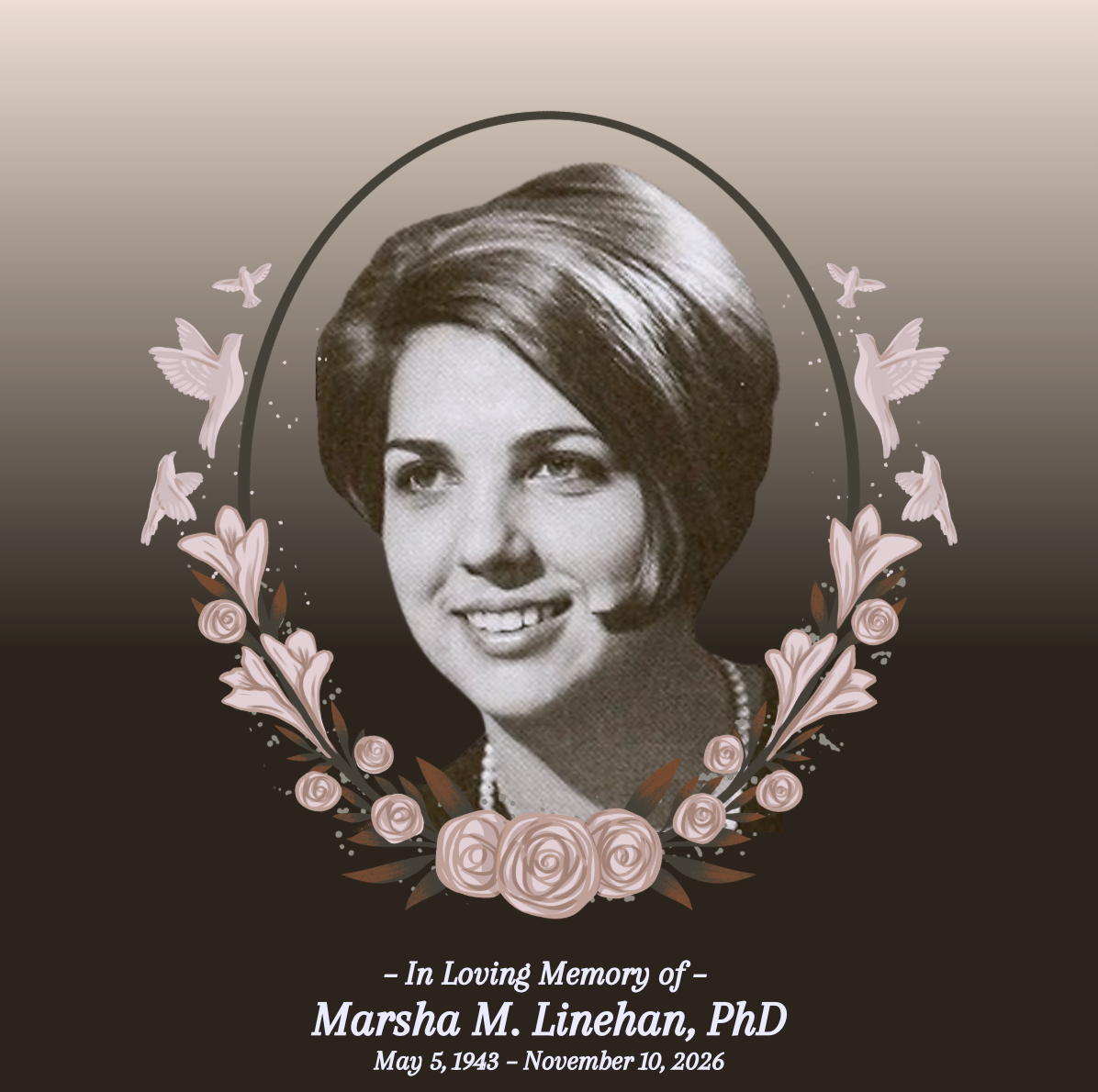
In loving memory of Dr. Marsha M. Linehan
(May 5, 1943 – November 10, 2026)
Portrait: The Loyolan (1968), Public domain, via Wikimedia Commons
On November 10, 2026, the world lost Dr. Marsha Linehan, the brilliant mind and extraordinary human behind Dialectical Behavior Therapy (DBT). As I reflect on her life and legacy, I find myself struggling to put into words the immeasurable ripple effect of one woman's determination, compassion, intellectual curiosity, and unwavering belief in the possibility of healing.
Marsha knew profound suffering. As a young woman, she experienced psychological pain so intense that she described it as living in hell. In the depths of that suffering, she made a promise to herself and to God: she would find her way out and return to help others do the same. And she did. Through extraordinary courage, scientific rigor, and a refusal to accept that some people were simply beyond help, she transformed the landscape of mental health treatment.
But her legacy extends far beyond the development of an evidence-based therapeutic approach. It's the lives saved, the suffering met with compassion instead of judgment, the people who discovered they weren't beyond help, the families who found hope, and the generations of therapists whose understanding of human suffering and healing would never be quite the same.
I'm one of those therapists.
Finding DBT
I was first introduced to DBT while completing my graduate studies in health psychology and counseling. My training was largely grounded in cognitive behavioral approaches, and although I appreciated the science and practical applications of CBT, something had always felt incomplete. I couldn't quite put my finger on it.
As I learned to apply cognitive behavioral principles in clinical practice, I found myself recognizing the importance of something that didn't always seem to receive the same emphasis as identifying unhelpful thoughts, changing behaviors, or developing new ways of coping. People needed to feel seen, heard, and understood. They needed to know that their experiences made sense, even when their circumstances, behaviors, or emotions were creating significant suffering. I could sense the importance of this, but I didn't yet have the clinical language or theoretical framework to fully articulate it.
That began to change during a counseling practicum at an eating disorder treatment program offering intensive outpatient (IOP) and partial hospitalization (PHP) services to adolescents, families, and adults. The program operated largely within a DBT framework, and its intensively trained clinical team introduced us to the model. What began as a crash course quickly became something much more meaningful. I shadowed therapists facilitating DBT skills groups, studied the material, and eventually began teaching the skills myself. Almost immediately, something clicked. Actually, several things clicked.
My background in health psychology had already deeply informed how I understood human beings through a biopsychosocial lens, recognizing that our biology, psychological experiences, relationships, and environments interact to shape our health and well-being. DBT's biosocial theory offered a particularly compelling explanation of how biological emotional vulnerability and invalidating environmental experiences can interact over time, contributing to difficulties with emotion regulation. It resonated with everything I had been learning about the complexity of human experience.
Witnessing the Power of Feeling Understood
Over the years, I continued working with and learning from intensively trained DBT teams, deepening my clinical practice, and developing and facilitating DBT-based programs. I built skills groups, developed intensive outpatient programming, and adapted existing research and treatment materials into practical curricula for adolescents and their families. Some of my most meaningful professional experiences came from translating complex clinical concepts into something people could recognize, understand, and apply to their own lives.
Reflecting now, I can vividly recall moments when introducing the biosocial model to adolescents, adults, and families and witnessing the power of feeling understood. Sometimes it was a visible shift in someone's posture, a softening in their expression, or a quiet moment of recognition. Other times, it was an almost immediate connection between what we were discussing and something they had experienced their entire lives but had never quite understood. Those moments when something finally made sense. When someone began to recognize that their emotional sensitivity wasn't inherently a flaw, that their responses had developed within a context, and that their suffering was understandable — reasonable, even. And perhaps most importantly, that understanding themselves didn't mean they were powerless to change.
I witnessed people begin to make peace with parts of themselves they had spent years fighting, judging, or desperately trying to change. I watched families develop new ways of understanding one another and saw adolescents who had struggled to imagine a different future begin identifying what a life worth living might actually look like for them. I remember the genuine surprise, sometimes even disbelief, when people began applying skills and discovered that they worked. Not perfectly, not all the time, and certainly not without effort, but enough to create a little more space between an emotion and a response. Enough to navigate a difficult moment differently, experience something they hadn't thought possible, or begin believing that their lives could be different.
I think about those moments often. And today, as I reflect on Marsha's life, I recognize that those moments were part of the extraordinary ripple effect of her work.
More Than a Therapeutic Approach
What I've always appreciated about DBT is that beneath its structured skills, behavioral principles, and substantial research foundation, there is a deeply compassionate understanding of what it means to be human. We are complex beings, shaped by our biology, environments, relationships, and lived experiences. We are capable of extraordinary resilience and profound suffering. We can be doing the very best we know how in a given moment and still need to learn new ways of responding. We can accept ourselves as we are while working toward meaningful change, and we can hold seemingly contradictory truths without having to choose between them.
These ideas have shaped far more than my use of DBT as a clinical intervention. They have influenced the way I conceptualize cases, approach relationships, understand suffering, support other clinicians, and navigate my own life and, honestly, this world that we all live in.
And perhaps that's part of Marsha's extraordinary contribution. She didn't simply develop a treatment for people who had too often been misunderstood, stigmatized, or considered “difficult to treat.” She helped challenge the assumptions underlying how we understand emotional suffering. She gave us a framework that could acknowledge the very real influence of biology and environment without diminishing human agency. She demonstrated that validation is not the same as agreement, acceptance is not the same as resignation, and change does not require us to first reject who we are.
Through her work, Marsha captured and gave language to something essential about the human experience: the complexity of suffering, the tension between accepting what is and working toward what could be, and the extraordinary possibility of finding meaning and hope even amid life's greatest challenges. She recognized the darkness of human suffering while simultaneously illuminating a path toward something different.
She reminded us that hope is not simply something we offer through words. It's something we help people experience through understanding, connection, and effective action.
The Ripple Effect of One Woman's Promise
I've been reflecting on Marsha as a wounded healer, not simply because of the suffering she endured, but because of what she chose to do with her experiences. She transformed her understanding of suffering into a lifelong commitment to helping others find their way through it, and she did so with extraordinary intellectual rigor, determination, and compassion.
I sometimes wonder whether she could have fully imagined the reach of that promise she made so many years ago. The countless people who would learn to understand themselves differently, the clinicians who would find a new way of approaching their work, the families who would learn to communicate with greater understanding and compassion, and the individuals who would discover that their pain did not have to define their future. The lives that would be saved and the ripples that would continue outward, touching people she would never meet.
I think about the many clients, families, students, supervisees, and fellow clinicians I've had the privilege of working with over the years, and I recognize how much of what I've been able to offer them has been shaped, directly or indirectly, by Marsha's work. That realization brings an overwhelming sense of gratitude.
Because the ripple effect doesn't end with the person who first receives the teaching. It continues every time someone uses a skill to navigate a difficult moment, every time a parent responds to their child's emotional pain with curiosity rather than judgment, and every time a therapist helps someone feel understood before inviting them toward change. It continues when we hold hope for someone who cannot yet hold it for themselves and when a person begins building a life they once struggled to imagine.
A little piece of Marsha's promise lives on in each of these moments.
And while I know her work will continue to evolve through ongoing research, clinical practice, and the contributions of future generations, I cannot help but feel the magnitude of what she gave us. I truly cannot imagine the field of mental health, or my own journey within it, without her.
Thank You, Marsha
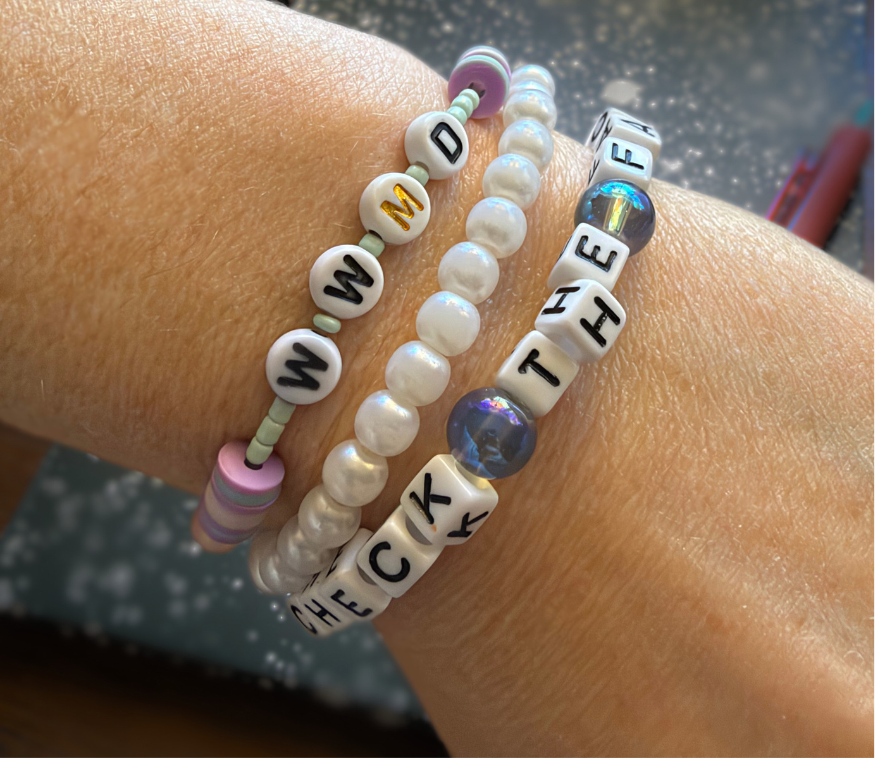
A couple of cherished reminders of Marsha's enduring influence on my work and life. My “WWMD” (What Would Marsha Do?) bracelet was lovingly handmade by a former supervisee, while my “Check the Facts” bracelet was crafted by a client at a treatment center where I previously worked. Two small, meaningful gifts that remind me just how far the ripples of Marsha's work continue to reach. 🤍
Thank you, Marsha, for coming back for others. For refusing to accept that anyone was beyond help. For teaching us that acceptance and change can coexist, that suffering deserves understanding, and that people deserve access to effective, compassionate care. Thank you for the science, the wisdom, the hope, and the countless lives touched by your courage and determination.
As a human whose life, and a therapist whose work, have been profoundly shaped by DBT, I cannot fully express my gratitude. But I can continue carrying the work forward with curiosity, humility, compassion, and a commitment to honoring the complexity and possibility inherent in every human life.
Marsha captured something essential about the human experience: that life can be extraordinarily painful and extraordinarily meaningful, sometimes simultaneously. And that even in the presence of profound suffering, the possibility of building a life worth living remains.
And perhaps one of the most fitting ways to honor Marsha is to hold the very dialectic she taught us to embrace: It's heartbreaking to lose her, and heartwarming to know that her legacy lives on in so many people. There is grief in knowing she is no longer here, and profound gratitude in recognizing that her influence continues through countless lives, relationships, and moments of healing. Both are true. Both deserve space.
Thank you, Marsha, for keeping that promise. May we honor your life by continuing to help others find their way toward lives worth living.
Rest in peace and power.
With much love, light, and eternal gratitude,
Chelsea Fielder-Jenks, MA, LPC-S, CEDS-C, PMH-C